When I first started crocheting, I bought a pattern that called for “DK weight” yarn. I had no idea what that meant. I went to the craft store, saw “worsted”, “sport”, “bulky” – I grabbed something random and hoped for the best. My scarf came out half the size it was supposed to be. That’s when I learned that yarn weight matters. A lot. The standard yarn weight system (0‑7) is the universal language of yarn thickness. In this guide, I’ll explain every weight – from lace (#0) to jumbo (#7) – with hook recommendations, project ideas, and which weights are best for beginners. Bookmark this page; you’ll come back to it every time you start a new project.
Why yarn weight matters (gauge, drape, yardage)
Yarn weight is the thickness of the strand. It’s measured on a scale from 0 (lace, very thin) to 7 (jumbo, very thick). The weight affects:
- Gauge: Thicker yarn = fewer stitches per inch. If you use a different weight than the pattern calls for, your project will be a different size.
- Drape: Lighter yarns create softer, drapier fabric (good for shawls). Heavier yarns create stiffer fabric (good for rugs).
- Yardage: Thicker yarn has fewer yards per skein. A scarf in worsted might take 300 yards; the same scarf in super bulky might take 150 yards.
- Speed: Thicker yarn works up faster. A chunky blanket can be finished in a weekend.
- Comfort: Some weights are better for certain projects. You wouldn’t make a summer top from super bulky wool.
The weight number is usually printed on the yarn label – look for a small symbol of a skein with a number inside. That’s your guide.
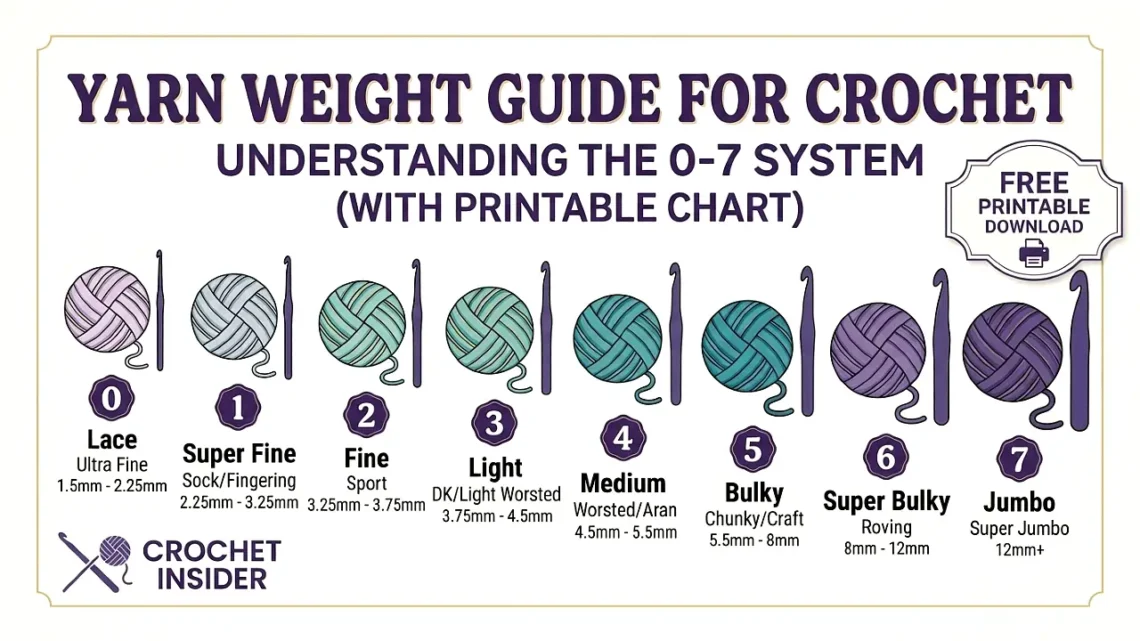
Complete yarn weight chart (0‑7)
| Weight # | Name | US name | Hook size (mm) | Best for | Beginner? |
|---|---|---|---|---|---|
| 0 | Lace / thread | 1.5 – 2.25 mm | Doilies, lace shawls | No (too thin) | |
| 1 | Super fine / fingering | 2.25 – 3.0 mm | Socks, lightweight garments | No (too thin) | |
| 2 | Fine / sport | 3.0 – 3.5 mm | Baby clothes, light blankets | Maybe | |
| 3 | Light / DK | 3.5 – 4.5 mm | Hats, scarves, garments | Yes (good for garments) | |
| 4 | Medium / worsted | 4.5 – 5.5 mm | Blankets, hats, scarves, amigurumi | YES – best for beginners | |
| 5 | Bulky | 5.5 – 6.5 mm | Fast blankets, winter hats, cowls | Yes (works up fast) | |
| 6 | Super bulky | 6.5 – 9.0 mm | Chunky blankets, rugs, arm knitting | Yes (very fast) | |
| 7 | Jumbo | 9.0 – 15.0 mm | Extreme chunky blankets, arm crochet | Yes (fast but heavy) |
For beginners: stick with weight #4 (worsted). It’s the most common, the easiest to see, and the most forgiving.
Weight 0: Lace / thread
Lace (0) – the thinnest
Hook size: 1.5 – 2.25 mm (steel hooks)
Examples: Crochet thread, size 10 thread, lace weight wool.
Best for: Doilies, lace shawls, delicate edgings, heirloom items.
Beginner? ★☆☆☆☆ – very challenging. Stitches are tiny and hard to see. Save for later.
Weight 1: Super fine / fingering
Fingering (1)
Hook size: 2.25 – 3.0 mm
Examples: Sock yarn, most variegated yarns for shawls.
Best for: Socks, lightweight shawls, baby garments, gloves.
Beginner? ★★☆☆☆ – stitches are small. Try after you’ve mastered worsted.
Weight 2: Fine / sport
Sport (2)
Hook size: 3.0 – 3.5 mm
Examples: Baby yarn, some cotton blends.
Best for: Baby blankets, lightweight garments, summer tops.
Beginner? ★★★☆☆ – workable, but worsted is easier.
Weight 3: Light / DK
DK (3) – Double Knitting
Hook size: 3.5 – 4.5 mm
Examples: Many indie dyed yarns, some acrylics.
Best for: Garments, hats, scarves, shawls – good drape.
Beginner? ★★★★☆ – great for garments, but worsted is still easier for first projects.
Weight 4: Medium / worsted (best for beginners)
Worsted (4) – the gold standard
Hook size: 4.5 – 5.5 mm
Examples: Red Heart Super Saver, Caron Simply Soft, Lion Brand Heartland.
Best for: Blankets, hats, scarves, amigurumi, bags, sweaters – almost everything.
Beginner? ★★★★★ – perfect. Stitches are easy to see, hooks are comfortable, patterns are abundant.
Best worsted yarns for beginners →
Weight 5: Bulky
Bulky (5)
Hook size: 5.5 – 6.5 mm
Examples: Lion Brand Wool‑Ease Thick & Quick (actually #6?), some chunky acrylics.
Best for: Fast blankets, winter hats, cowls, house slippers.
Beginner? ★★★★☆ – works up fast, but stitches are larger and can be tiring on the hands.
Free bulky yarn patterns →
Weight 6: Super bulky
Super bulky (6)
Hook size: 6.5 – 9.0 mm
Examples: Lion Brand Wool‑Ease Thick & Quick, Bernat Blanket.
Best for: Very fast blankets, rugs, arm knitting, chunky scarves.
Beginner? ★★★★☆ – fast and satisfying, but heavy. Good for second or third projects.
Weight 7: Jumbo
Jumbo (7)
Hook size: 9.0 – 15.0 mm (or your arm!)
Examples: T‑shirt yarn, roving, jumbo acrylics.
Best for: Arm‑knit blankets, rugs, floor cushions, novelty items.
Beginner? ★★★☆☆ – very fast, but can be awkward to handle. Not recommended for first project.
How to substitute yarn weights
Sometimes you want to use a different weight than the pattern calls for. Here’s how to do it:
- Going up a weight (e.g., worsted to bulky): Your project will be larger. To compensate, use a smaller hook than recommended for the bulky yarn, or adjust the number of stitches.
- Going down a weight (e.g., worsted to DK): Your project will be smaller. Use a larger hook than recommended for the DK yarn, or add stitches/rows.
- Always make a gauge swatch. This is the only way to know if your substitution will work.
- Hold two strands together. Two strands of DK = roughly worsted weight. Two strands of fingering = DK. This is a great way to use up leftover yarn.
For a detailed guide on substituting yarn, see our yarn substitution guide.
Free printable yarn weight chart
Here’s a quick reference table you can screenshot or print. Keep it in your wallet or project bag.
| Weight # | Name | Hook size (mm) | Common projects |
|---|---|---|---|
| 0 | Lace | 1.5‑2.25 | Doilies, lace shawls |
| 1 | Fingering | 2.25‑3.0 | Socks, shawls |
| 2 | Sport | 3.0‑3.5 | Baby items, light garments |
| 3 | DK | 3.5‑4.5 | Garments, hats |
| 4 | Worsted | 4.5‑5.5 | Blankets, hats, scarves, amigurumi | 5 | Bulky | 5.5‑6.5 | Fast blankets, cowls |
| 6 | Super bulky | 6.5‑9.0 | Chunky blankets, rugs |
| 7 | Jumbo | 9.0‑15.0 | Extreme chunky, arm crochet |
Which yarn weight should you start with?
If you’re a complete beginner, buy worsted weight (#4) in a light, solid colour. Pair it with a 5.5mm (I‑9) hook. This combination is the most forgiving, easiest to see, and used in most beginner patterns. Once you’ve mastered the basics, experiment with DK (#3) for garments or bulky (#5) for fast blankets. But start with worsted – it’s the goldilocks weight for a reason.
You might also enjoy

Related Posts
Best Crochet Hooks for Beginners: What to Buy (and What to Avoid)
How to Crochet Amigurumi for Beginners: Your First Stuffed Animal (Step by Step)